

Dr Mark McBride-Wright is an award-winning LGBT activist, safety engineer, and leadership expert who is widely recognised for advancing inclusion within engineering and other high-hazard industries. Combining deep technical credibility with lived experience, Mark speaks with authority on LGBT visibility, allyship and psychological safety in traditionally male-dominated sectors. His work focuses on dismantling structural barriers, challenging outdated leadership norms and ensuring LGBT professionals can thrive without compromising their identity.
After completing his PhD at Imperial College London, Mark began his career advising global clients on safety and risk at ERM and KBR. While working in these highly technical environments, he witnessed the absence of visible LGBT role models and the cultural pressures faced by minority engineers. In response, he co-founded InterEngineering, a professional network dedicated to championing LGBT inclusion across engineering and technology. The organisation quickly gained national recognition, winning Corporate Rising Star at the British LGBT Awards and establishing itself as a respected platform for advocacy, mentoring and employer engagement.
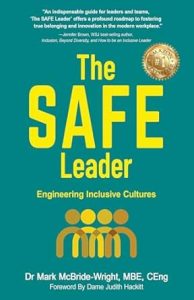
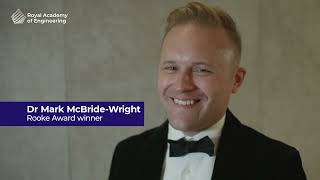
Building on this momentum, Mark went on to lead and advise on inclusion strategies for major institutions, including the Royal Academy of Engineering, Eurostar, GKN Aerospace, the Institution of Mechanical Engineers and Vodafone. He later founded EqualEngineers, connecting inclusive employers with diverse talent, and established the Engineering Talent Awards to celebrate underrepresented professionals in STEM. Appointed MBE for services to diversity and inclusion in engineering, Mark has also served as a judge for the Women’s Engineering Society Top 50 Women in Engineering and the Ingenious Awards, further reinforcing his standing as a sector leader. Mark is also the author of ‘The SAFE Leader’.
As an LGBT speaker, Mark delivers more than awareness. He equips leaders with evidence-based frameworks to embed inclusion into governance, recruitment and safety culture. Drawing on his SAFE Leadership Framework and real-world experience with organisations such as EDF Energy and McLaren Racing, he demonstrates how authentic allyship, visible role modelling and psychological safety improve retention, innovation and operational performance. His talks confront issues such as masculinity in leadership, mental health stigma and the risk of silence in high-pressure environments, leaving audiences with practical tools to create genuinely inclusive workplaces

