

Lesbian Visibility Week 2027 will take place from Monday 26 April to Sunday 2 May, bringing businesses, schools, colleges, universities and communities together to celebrate lesbian identity, achievement and representation (Source: Stonewall).
The week provides an opportunity for organisations and educational institutions to examine whether lesbian women are visible within their leadership, policies, communications, curriculum and wider culture.
What Is the History of Lesbian Visibility Week?
Lesbian Visibility Week was created in 2020 by Linda Riley, Publisher of DIVA magazine (Source: DIVA Magazine). It expanded the established Lesbian Visibility Day into a full week of events, conversations and campaigns celebrating lesbian women while supporting LGBTQIA+ women and non-binary people.
The campaign has since been supported by organisations including Stonewall, UK Black Pride, Kaleidoscope Trust, LGBT Foundation and akt. Previous celebrations have included the lesbian flag being raised in London, events at the London Stock Exchange and major UK venues being illuminated to mark the occasion.
Lesbian Visibility Week now aims to improve public understanding, amplify underrepresented voices and increase recognition of the contribution lesbian women make to workplaces, education, sport, politics, culture and wider society.
Why Is Lesbian Visibility Week Important in 2027?
Office for National Statistics data published in December 2025 estimated that 1.4% of women in the UK identified as gay or lesbian in 2024, while 2% identified as bisexual. Among women aged 16 to 24, 1.9% identified as gay or lesbian and 6.7% identified as bisexual (Source: Office for National Statistics)
Greater visibility does not mean discrimination has disappeared. TUC research published in 2024 found that 52% of LGBT+ employees had experienced bullying or harassment at work during the previous five years. Around 19% had encountered verbal abuse about LGBT+ people, while other respondents reported threats, intimidation and physical violence.
Lesbian Visibility Week gives organisations a defined period in which to celebrate progress, address inequality and make lesbian experiences more visible.
How Can Businesses Celebrate Lesbian Visibility Week 2027?
The following five actions reflect recent UK workplace research, equality legislation and examples of effective LGBTQ+ inclusion.
- Review Policies, Benefits and Everyday Practices
- Increase Lesbian Visibility in Leadership
- Support Employee Networks and Community Partnerships
- Recognise Intersectional Experiences
- Challenge Stereotypes and Everyday Language
1. Review Policies, Benefits and Everyday Practices
Businesses should review their policies to ensure they consistently support lesbian employees and same-sex couples. This includes recruitment, promotion, parental leave, adoption support, fertility treatment, bereavement leave, pensions, workplace benefits and invitations to company events. Forms and internal communications should use inclusive language, such as ‘partner’, where appropriate, rather than assuming every employee has a husband or wife of a different sex. Sexual orientation is a protected characteristic under the Equality Act 2010, safeguarding employees from discrimination, harassment and victimisation (Source: Equality and Human Rights Commission).
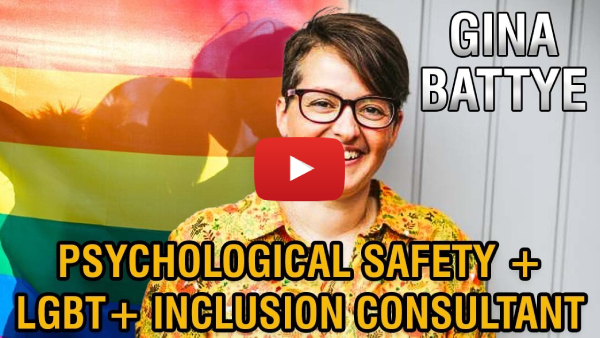
Gina Battye helps organisations turn inclusion commitments into psychologically safe workplace cultures. As an LGBTQ+ consultant, Founder of the Psychological Safety Institute and creator of the ‘5 Pillars of Psychological Safety’, she equips leaders with practical strategies to strengthen inclusion, belonging and employee confidence.
2. Increase Lesbian Visibility in Leadership
Visible lesbian role models help challenge assumptions about who belongs in leadership, public-facing and high-performance roles. Visibility should always be voluntary, with employees encouraged to take part only if they feel comfortable. Organisations can also highlight external speakers, historical figures and community leaders rather than relying solely on their own workforce.
Office for National Statistics data published in 2025 estimated that around 1.2 million UK adults identified as gay or lesbian in 2024, with younger generations more likely to identify as LGB, making inclusive leadership increasingly important.

Dame Kelly Holmes MBE is a powerful example. The double Olympic gold medallist came out publicly in 2022 after concealing her sexuality throughout much of her military and sporting career. Today, she speaks on identity, resilience, mental health and the value of living authentically.
3. Support Employee Networks and Community Partnerships
Employee networks play a vital role in building inclusive workplaces, providing community, advising senior leaders and highlighting barriers that policies or workforce data may overlook. To make a meaningful impact, networks should receive dedicated funding, visible executive sponsorship and protected time to contribute beyond social events. Their insight is particularly valuable when reviewing policies, recruitment processes, employee benefits and internal communications.
Research found that 39% of LGBTQ+ employees still hide their identity at work, while 31% do not feel able to be themselves and the same proportion would feel uncomfortable reporting homophobic or biphobic bullying or harassment (Source: Stonewall).

As Co-Founder and Executive Director of UK Black Pride, Lady Phyll demonstrates how community-led leadership can strengthen visibility, belonging and equality for LGBTQ+ communities.
4. Recognise Intersectional Experiences
Lesbian women experience the workplace through many aspects of their identity, not solely their sexual orientation. Race, disability, religion, age, gender expression, immigration status and socioeconomic background can all shape how included and supported someone feels.
Analysis of Census 2021 data, published by the Office for National Statistics in 2023, found that 32.4% of LGB+ people aged 16 to 24 in England and Wales were disabled, compared with 12.6% of the wider population in the same age group. Lesbian and bisexual women seeking asylum may also face significant barriers during the UK asylum process (Source: Office for National Statistics).

Speaker Aderonke Apata combines legal expertise with lived experience, sharing insights on intersectionality, psychological safety, inclusive language and supporting LGBTQIA+ refugees.
5. Challenge Stereotypes and Everyday Language
Lesbian women continue to face stereotypes about their appearance, relationships, femininity and professional ability. These assumptions often appear as jokes, workplace banter or intrusive questions, including comments about how someone ‘looks lesbian’, assumptions about family roles or sexualised remarks about same-sex relationships. Leaders should challenge inappropriate language consistently, even if no formal complaint has been made, explaining why comments are unacceptable and reinforcing expected standards of behaviour.
Updated guidance confirms that unwanted behaviour related to sexual orientation may constitute harassment if it violates someone’s dignity or creates an intimidating, hostile, degrading, humiliating or offensive environment (Source: Acas).

Comedian and Co-Founder of The LOL Word, Chloe Green, uses humour to explore LGBTQ+ identity, feminism and relationships, showing how comedy can break down stereotypes and encourage more open, respectful conversations.
How Can Schools, Colleges and Universities Celebrate Lesbian Visibility Week 2027?
Schools, colleges and universities can use Lesbian Visibility Week to improve representation, challenge bullying and help students understand the diversity of LGBTQ+ lives.
Activities should be suitable for the audience’s age and educational setting. Education policy differs across England, Scotland, Wales and Northern Ireland, so institutions should follow the legislation and statutory guidance that applies to them.
The following three actions provide a practical starting point:
- Give Students Positive Lesbian Role Models
- Strengthen Digital Literacy and Online Safety
- Listen to Students and Support Wellbeing
1. Give Students Positive Lesbian Role Models
Visible role models help students recognise that lesbian women make valuable contributions across every part of society. Schools and universities can invite athletes, actors, campaigners, business leaders and other public figures to share their experiences, challenge stereotypes and show that sexual orientation never defines someone’s ambitions or potential.
External speakers also remove the pressure from lesbian students and staff, who should never feel responsible for educating others simply because of their identity. During the 2023 to 2024 academic year, Diversity Role Models delivered 1,389 workshops to more than 45,000 pupils across 268 schools, with every participating staff member agreeing that role model stories helped students celebrate difference and build empathy (Source: Diversity Role Models).
2. Strengthen Digital Literacy and Online Safety
Social media can give young lesbian people access to community, information and positive representation. It can also expose them to bullying, misinformation, hate speech and pressure to disclose personal information. Students should learn how algorithms shape what they see, how to report abusive content and how to protect their privacy. Staff should understand the online platforms students use and respond seriously when digital harassment affects learning or wellbeing.
Educational institutions should make clear that discriminatory behaviour remains unacceptable when it takes place online, outside school hours or through private messaging groups. Under the Online Safety Act 2023, online platforms have legal duties to protect children from harmful and age-inappropriate material (Source: GOV.UK). Child safety duties introduced in July 2025 included measures addressing bullying and hateful content, alongside clearer reporting routes for children and parents.

GK Barry, aka Grace Keeling, has built a large audience through social media and ‘The Saving Grace Podcast’. Through humour and open conversations about identity, mental health and relationships, she demonstrates how digital platforms can increase lesbian visibility and help younger audiences feel represented.
3. Listen to Students and Support Wellbeing
Support during Lesbian Visibility Week should be guided by the people it is designed to benefit. Schools, colleges and universities can consult LGBTQ+ student groups, staff networks, wellbeing teams and societies before planning activities or reviewing policies. Feedback should always be voluntary, confidential where appropriate, and followed by clear action.
Institutions should also ensure counselling, pastoral care and reporting systems are accessible, with staff trained to provide informed, inclusive support without making assumptions. A 2024 UK survey commissioned by Theirworld found that 47% of LGBTQ+ young people had experienced bullying or discrimination because of their sexual orientation, while almost half did not report it.

Zayna Brookhouse brings an intersectional perspective to student events, exploring identity, wellbeing, belonging and the impact of gender, sexuality and race on lived experience.
Final Thoughts
Lesbian Visibility Week gives businesses, schools and universities an opportunity to celebrate the achievements, identities and experiences of lesbian women while improving inclusion. Start by deciding what you want attendees to learn, reflect on or do differently after the event.
Employers may focus on increasing lesbian representation in leadership, educating managers or strengthening LGBTQ+ employee networks, while educators might prioritise challenging stereotypes, supporting student wellbeing and improving curriculum representation. Activities could include keynote speeches, panel discussions, workshops, assemblies, lectures or cultural events.
Provide speakers with a clear brief about your audience and objectives, and invite anonymous questions beforehand to encourage honest discussion. The greatest impact comes from turning conversations into lasting action through policy reviews, better representation and ongoing inclusion training throughout the year.
To hire a speaker for Lesbian Visibility Week 2027, call a booking agent today on 0203 9816 295, or via our online contact form. View our range of Lesbian speakers here.

